Honey Baklava: A Golden, Flaky Masterpiece
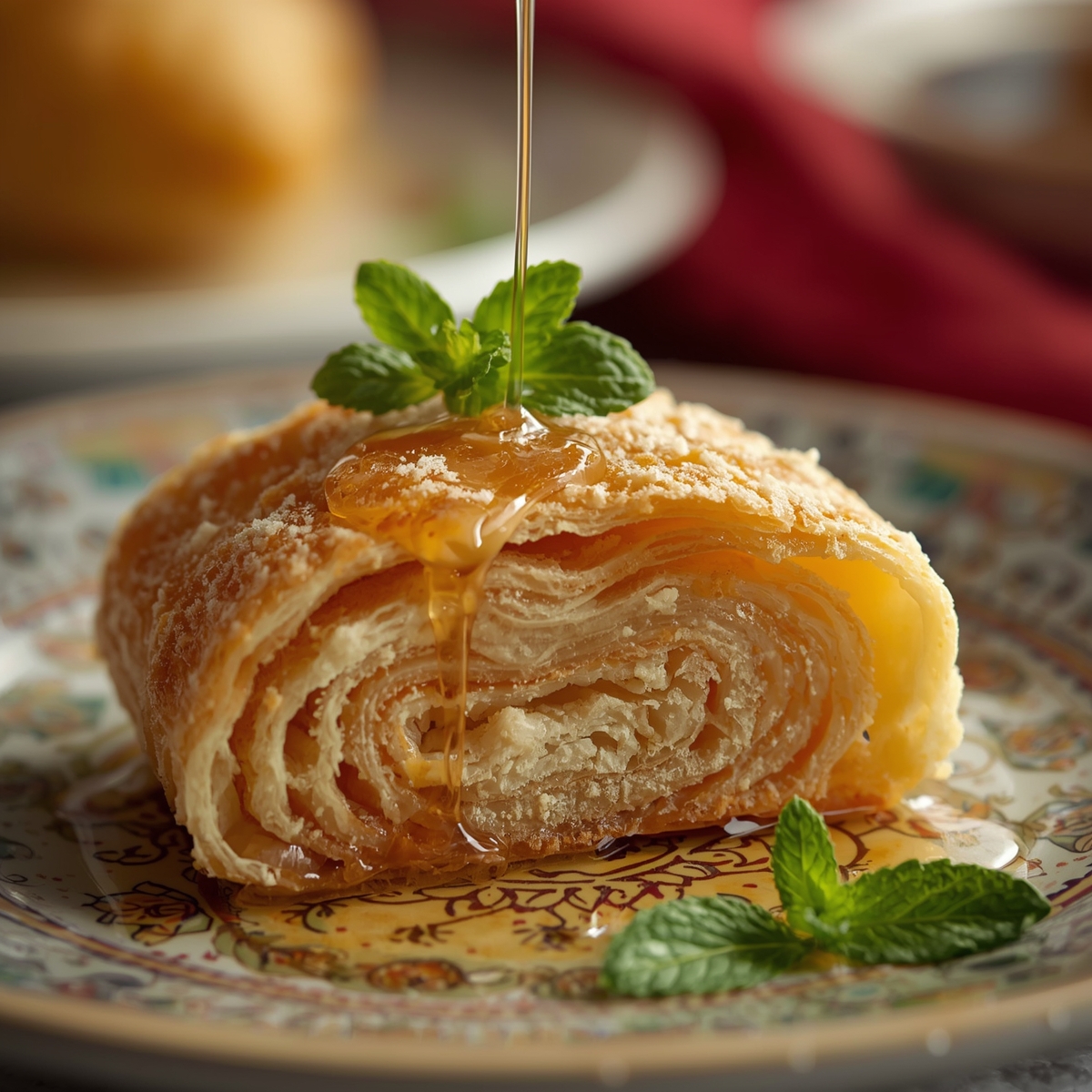
This recipe is the “crown jewel” of Mediterranean desserts. While we previously explored the creamy version, the Classic Honey Baklava is the traditional standard—prized for its long shelf life, intense crunch, and the deep, floral sweetness that only pure honey can provide.
The Gold Standard: Authentic Honey & Walnut Baklava
If there is one dessert that defines opulence and patience, it is Baklava. Layers of buttered phyllo dough, a spiced nut filling, and a generous drenching of honey syrup create a treat that has been perfected over centuries.
Making baklava at home can feel intimidating, but the process is actually quite therapeutic. It’s all about the rhythm of brushing, layering, and the satisfying “crackle” of the knife through crisp pastry. In this post, we’ll break down the traditional method to ensure your baklava is never soggy and always spectacular.
The Core Components of Great Baklava
To achieve a bakery-quality result, you must focus on three main pillars:
- The Phyllo (Filo): This is the paper-thin dough that creates the “shatter.” It must be treated gently and kept hydrated with butter.
- The Nut Blend: While pistachios are popular, a traditional Honey Baklava often uses Walnuts or a mix of walnuts and almonds for a more robust, earthy flavor.
- The Syrup (The “Attar”): Unlike a simple sugar syrup, we use a honey-heavy base infused with cinnamon and lemon to provide a complex, floral finish.
Ingredients You’ll Need
For the Pastry & Filling
- 1 lb (450g) Phyllo Dough: (Standard #4 thickness is best).
- 1 cup (225g) Unsalted Butter: Melted and clarified (remove the white foam from the top).
- 3 cups Walnuts: Finely chopped (but not turned into a powder).
- 1 tsp Ground Cinnamon: To mix with the nuts.
- 1/4 tsp Ground Cloves: For an authentic warm aroma.
For the Honey Syrup
- 1 cup Granulated Sugar
- 1 cup Water
- 1/2 cup High-Quality Honey: (Clover, Orange Blossom, or Wildflower).
- 1 tsp Lemon Juice: (Prevents the sugar from crystallizing).
- 1 Cinnamon Stick: For infusion.
Step-by-Step Instructions
1. Master the Syrup First
The most important rule of baklava: One must be hot, and one must be cold. 1. In a saucepan, combine sugar, water, and the cinnamon stick.
2. Bring to a boil, then reduce heat and simmer for 10 minutes.
3. Stir in the honey and lemon juice.
4. Remove from heat and let it cool completely to room temperature while you prepare the pastry.
2. Prepare the Nuts
Pulse the walnuts in a food processor until they are finely pebbled. Stir in the cinnamon and cloves. Set this aside in a bowl.
3. Layer the Foundation
- Preheat your oven to 325°F (160°C). A lower temperature ensures the interior layers dry out and become crisp without burning the top.
- Brush the bottom of a 9×13 inch pan with melted butter.
- Lay down 8 to 10 sheets of phyllo, brushing each individual sheet with butter before adding the next. This creates the sturdy “base.”
4. The Nut Layers
- Sprinkle about 1/4 of the nut mixture over the buttered phyllo.
- Top with 4 sheets of phyllo, buttering each one.
- Repeat this process until all the nuts are used.
- Finish with the remaining sheets of phyllo (usually 10-12 sheets) for a thick, flaky top crust.
5. The Signature Cut
Before baking, use a sharp knife to cut the baklava into diamonds or squares.
Why? Once baked, the phyllo is too brittle to cut cleanly. Cutting beforehand also allows the butter and later the syrup to penetrate every layer.
6. The Bake
Bake for 45–60 minutes. You are looking for a deep, golden-amber color. If it looks pale, it will likely be soggy once the syrup is added.
7. The Final Pour
Remove the pan from the oven. Immediately pour the cooled honey syrup over the piping hot baklava. You will hear a loud sizzle—that’s the sound of success!
Top 3 Tips for Success
- Clarify Your Butter: Simmer your butter and skim off the milk solids. This prevents the baklava from having “burnt butter” spots.
- The Squeeze Test: If you see excess butter pooling in the corners before baking, tilt the pan and drain it. Too much butter makes it greasy; too little makes it dry.
- Patience: Do not eat it immediately! Baklava needs at least 8 hours to absorb the syrup and develop its texture.
Frequently Asked Questions
How should I store it?
Do not refrigerate! Cold temperatures make the honey crystallize and the pastry lose its crunch. Store it at room temperature, covered with a light cloth or loose foil, for up to 2 weeks.
Can I use different nuts?
Yes! Pistachios are traditional in Turkey, while walnuts and almonds are more common in Greek and Levantine versions.