Authentic Italian Bolognese Pasta
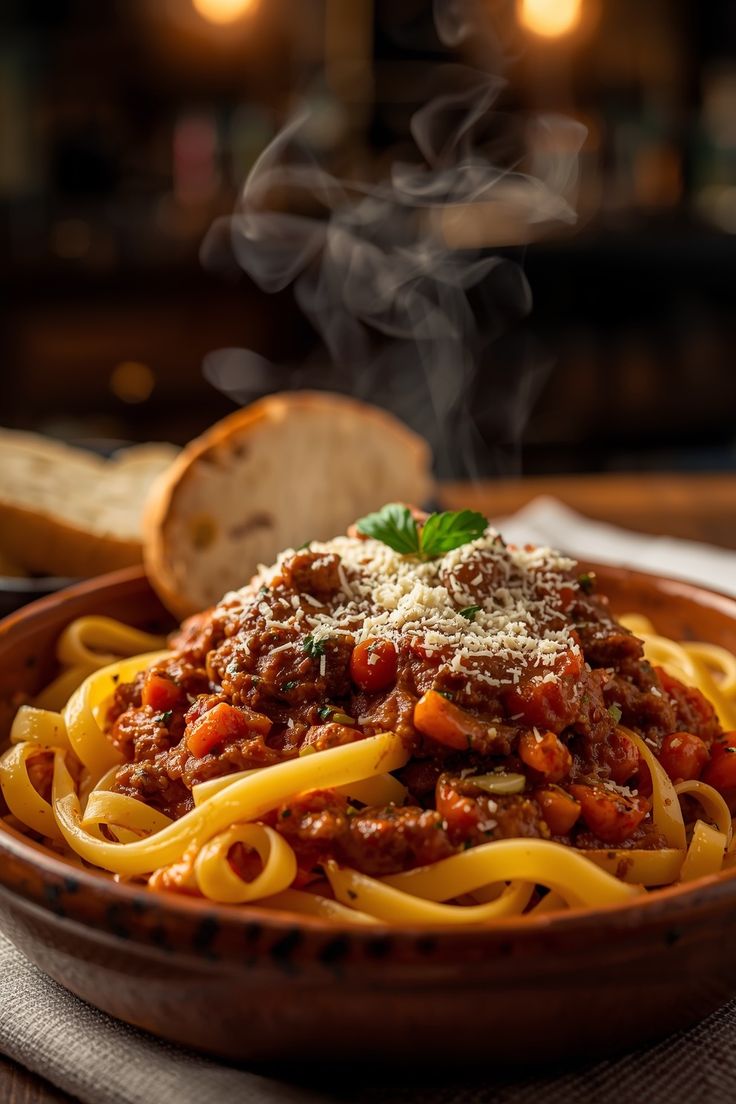
The official recipe for Ragù alla Bolognese was actually registered at the Bologna Chamber of Commerce in 1982. To be authentic, it must follow specific rules:
- The Soffritto: A fine dice of onion, celery, and carrots.
- The Meat: A mix of beef and lamb (fat is flavor!).
- The Liquid: Wine and milk are essential.
- The Pasta: Traditionally served with Tagliatelle, not Spaghetti. The wide ribbons of egg pasta hold the heavy sauce much better than thin strands.
Ingredients You’ll Need
The Meat & Base:
- 500g Ground Beef (80/20): You need the fat for the sauce to emulsify.
- 250g Ground Pork or Pancetta: Adds depth and a silky texture.
- 1 Large Onion: Finely minced.
- 2 Medium Carrots: Finely minced.
- 2 Stalks Celery: Finely minced.
- 2 tbsp Tomato Paste (Double Concentrated): This provides the color and base flavor.
The Liquids (The Magic Trio):
- 1 cup Dry White Wine: Interestingly, authentic Bolognese often uses white wine rather than red for a more delicate acidity.
- 1 cup Full-Cream Milk: This tenderizes the meat and creates a creamy finish.
- 1 cup Beef Broth: To keep the sauce moist during the long simmer.
For Serving:
- 500g Fresh Tagliatelle: Or Pappardelle.
- Parmigiano-Reggiano: Freshly grated.
- Nutmeg: Just a tiny pinch.
- Butter: A knob to finish.
Step-by-Step Instructions
1. The Soffritto (The Foundation)
Heat a large, heavy-bottomed pot (a Dutch oven is perfect) over medium heat with a splash of olive oil and a knob of butter. Add your minced onion, carrot, and celery. Sauté these slowly for about 10–12 minutes. You aren’t looking to brown them; you want them soft, translucent, and sweet.
2. The Meat Sear
Increase the heat to medium-high. Add the ground beef and pork. Use a wooden spoon to break the meat into very small crumbles. Cook until the meat has lost its raw pink color and begins to brown slightly.
Pro Tip: Don’t rush this. Letting the meat lightly caramelize at the bottom of the pot creates fond, which adds immense flavor.
3. The Deglaze
Pour in the white wine. Use your spoon to scrape up all those delicious brown bits from the bottom of the pot. Let the wine simmer until it has almost completely evaporated.
4. The Milk Secret
This is where the magic happens. Pour in the milk and add a tiny pinch of nutmeg. Simmer gently until the milk has evaporated. This step protects the meat from the acidity of the tomatoes and wine, ensuring every morsel is buttery and tender.
5. The Slow Simmer
Stir in the tomato paste and the beef broth. Reduce the heat to the lowest setting possible. The sauce should barely “smile” (bubbles breaking the surface very slowly).
Cook uncovered for at least 3 hours. If it looks too dry, add a splash of broth or water. By the end, you should have a thick, rich, rust-colored ragù—not a red tomato sauce.
Serving Like an Italian
When your sauce is ready, do not simply pour it over a pile of dry pasta.
- Boil your Tagliatelle in salted water until al dente.
- Transfer the pasta directly into the sauce pot with a splash of the starchy pasta water.
- Toss vigorously over low heat for 60 seconds. This “marries” the sauce to the pasta.
- Remove from heat, add a knob of cold butter and a handful of Parmigiano-Reggiano, and toss again.
Nutritional Information (Per Serving)
| Nutrient | Amount |
| Calories | 620 kcal |
| Protein | 35g |
| Fat | 24g |
| Carbohydrates | 65g |
Frequently Asked Questions
Can I use Spaghetti?
While “Spaghetti Bolognese” is famous worldwide, Italians rarely eat it. The meat sauce is too heavy for thin spaghetti and ends up at the bottom of the bowl. Tagliatelle is the gold standard.
Can I make this in a Slow Cooker?
Yes! After browning the meat and deglazing with wine on the stove, transfer everything to a slow cooker. Set it on “Low” for 6–8 hours.
Does it freeze well?
Bolognese is actually better the next day. It freezes perfectly for up to 3 months. It’s the ultimate “cook big, eat twice” meal.
Conclusion
Authentic Italian Bolognese isn’t about fancy ingredients; it’s about the process. By giving the meat time to break down in milk and wine, you transform humble ingredients into a world-class meal. It’s a slow-paced ritual that reminds us that the best things in life—and the kitchen—cannot be rushed.