Italian Caprese Salad
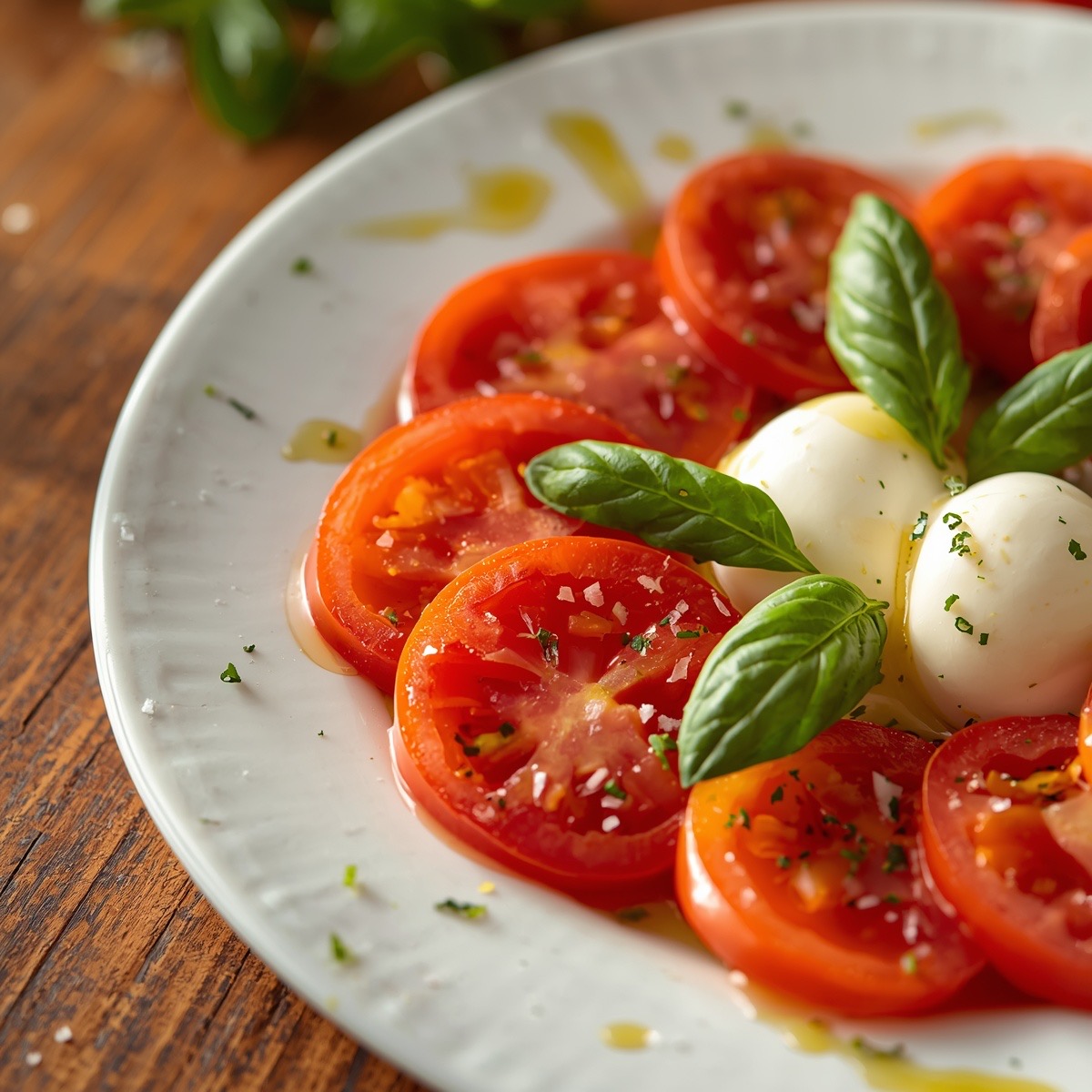
If there is one dish that captures the essence of the Mediterranean summer, it is the Caprese Salad. Named after the island of Capri, this salad is a vibrant representation of the Italian flag: green (basil), white (mozzarella), and red (tomato).
In this post, we will break down how to select the best ingredients, the “dos and don’ts” of Caprese etiquette, and the secret to the perfect balsamic glaze.
The Philosophy of the Caprese
Unlike Americanized versions that might pile on olives, onions, or lettuce, a true Insalata Caprese is simple. It relies on the peak of harvest season. If your tomatoes aren’t ripe or your basil isn’t fresh, the dish falls flat.
Why It Works
The magic of the Caprese is in the fat and acid balance. The creamy, milky fat of the buffalo mozzarella softens the sharp acidity of the tomatoes, while the aromatic oils in the basil provide a refreshing finish.
Ingredients: Quality Over Quantity
To make a world-class Caprese, you need exactly five things (plus seasoning):
1. The Tomatoes
Seek out Heirloom or Vine-Ripened tomatoes. They should be heavy for their size and fragrant at the stem. In the off-season, you can use cherry tomatoes for a “Caprese Skewer” variation, as they tend to hold sweetness better than large hothouse tomatoes.
2. The Mozzarella
For the most authentic experience, look for Mozzarella di Bufala (Buffalo Mozzarella). It is creamier and more flavorful than cow’s milk mozzarella. If that’s unavailable, “Fior di Latte” (fresh cow’s milk mozzarella) is the next best thing. Avoid the low-moisture, rubbery mozzarella used for pizza.
3. The Basil
Use only fresh, large-leaf Italian Genovese basil. Never use dried basil—it lacks the essential oils that define this dish.
4. Extra Virgin Olive Oil (EVOO)
This is not the time for your “cooking” oil. Use a high-quality, cold-pressed finishing oil. Look for words like “peppery” or “grassy” on the label.
5. Salt and Pepper
Flaky sea salt (like Maldon) adds a delightful crunch, while freshly cracked black pepper provides a subtle heat.
The Recipe: Step-by-Step
Ingredients List:
- 3 large ripe Heirloom tomatoes
- 8 oz Fresh Mozzarella (sliced into 1/4 inch rounds)
- 1 bunch fresh Basil leaves
- 3 tbsp high-quality Extra Virgin Olive Oil
- 1 tbsp Balsamic Glaze (optional, see note below)
- Flaky sea salt and cracked black pepper
Instructions:
- Slice the Produce: Slice your tomatoes into rounds roughly the same thickness as your mozzarella slices (about $1/2$ cm to $1$ cm).
- The Layering: On a large platter, alternate slices of tomato and mozzarella. Tuck a large, fresh basil leaf between each layer. You can overlap them in a circular pattern or a straight line.
- The Seasoning: Sprinkle the salt and pepper generously over the tomatoes specifically. Salt draws out the juices of the tomato, creating a natural sauce when it hits the oil.
- The Drizzle: Generously drizzle the olive oil over the entire platter.
- The Finishing Touch: If you prefer a sweeter profile, drizzle a small amount of balsamic glaze in a zig-zag pattern across the salad.
To Glaze or Not to Glaze?
There is a heated debate among purists regarding Balsamic Vinegar.
- The Traditionalist view: Only oil and salt. Vinegar is too acidic and masks the delicate flavor of the mozzarella.
- The Modernist view: A reduced balsamic glaze adds a syrupy sweetness that complements the tomatoes perfectly.
My recommendation: If your tomatoes are at their absolute peak of sweetness, skip the vinegar. If they are slightly underripe, use the glaze to bridge the flavor gap.
Pro-Tips for a Better Salad
Pro-Tip #1: Room Temperature is Key. Never serve a Caprese straight from the fridge. Cold temperatures mute the flavor of the tomato and make the mozzarella feel waxy. Let the ingredients sit on the counter for 30 minutes before assembling.
Pro-Tip #2: Don’t Slice the Basil. Tearing basil leaves by hand or leaving them whole prevents the edges from turning black (oxidizing), which happens when you use a metal knife.
Pro-Tip #3: The “Juice” Bread. Always serve Caprese with a side of crusty ciabatta or baguette. The mixture of tomato water, olive oil, and melted salt at the bottom of the plate is liquid gold—don’t let it go to waste!
Variations: The “Deconstructed” Caprese
If you are serving a crowd or want something more “snackable,” try these twists:
- Caprese Skewers: Thread a cherry tomato, a “bocconcini” (small mozzarella ball), and a folded basil leaf onto a toothpick. Drizzle with glaze.
- Burrata Caprese: Replace the sliced mozzarella with a ball of Burrata cheese in the center of the plate. Break it open just before serving so the cream spills over the tomatoes.
- Caprese Pasta Salad: Toss fusilli pasta with halved cherry tomatoes, pearls of mozzarella, and a basil pesto.
Frequently Asked Questions (FAQ)
Can I make Caprese Salad ahead of time?
It is best eaten within 1 hour of assembly. If it sits too long, the salt will draw too much water out of the tomatoes, making the salad soggy and diluting the olive oil.
What should I serve with Caprese?
It pairs beautifully with grilled chicken, sea bass, or a simple pasta carbonara. It is also the perfect accompaniment to a glass of chilled Pinot Grigio or Prosecco.
Is it gluten-free?
Yes! Naturally, the Caprese salad is gluten-free and keto-friendly, making it an excellent option for guests with dietary restrictions.
Nutrition Table (Per Serving)
| Component | Value |
| Calories | 210 |
| Total Fat | 16g |
| Protein | 10g |
| Net Carbs | 4g |
The Caprese Salad is a reminder that in cooking, sometimes less is truly more. By respecting the ingredients and following these simple steps, you can bring a taste of the Italian coast to your dinner table.