Authentic German Beef Rouladen (Rinderrouladen): The Ultimate Sunday Roast
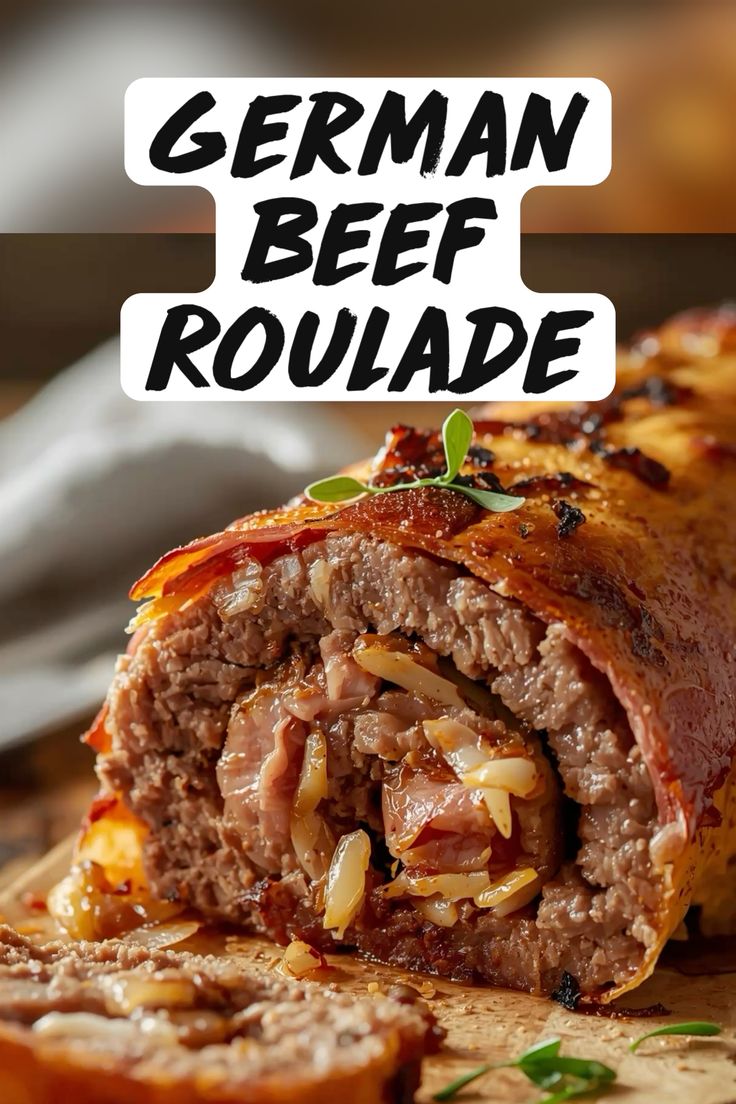
If there is one dish that defines German “Gemütlichkeit” (coziness and belonging), it is Rinderrouladen. These savory, tender beef rolls are a masterpiece of traditional European home cooking. Imagine thin slices of beef slathered with spicy mustard, stuffed with smoky bacon, zesty pickles, and onions, then braised for hours in a rich red wine gravy until they melt in your mouth.
Whether you’re celebrating Oktoberfest at home or looking for a hearty winter meal, this Authentic German Beef Roulade recipe will transport you straight to a rustic tavern in Bavaria.
The Anatomy of a Perfect Roulade
While every German Oma (grandmother) has her own secret twist, the core of a traditional Rinderroulade consists of four essential filling components:
- German Mustard: Specifically Senf (Düsseldorf or spicy brown), which provides a sharp contrast to the rich meat.
- Smoky Bacon: Adds necessary fat to lean cuts of beef and a hint of woodsmoke flavor.
- Onions: Finely sliced or diced for a subtle sweetness.
- Dill Pickles: The “secret weapon.” When heated, the pickle softens and its acidity cuts through the richness of the gravy.
Ingredients You’ll Need
For the Beef Rolls:
- 8 Slices of Beef Round: Look for “top round” or “bottom round.” They should be sliced thin (about $1/4$ inch) and be roughly the size of your hand.
- 8 tsp German Mustard: (Düsseldorf style or Spicy Brown).
- 8 Slices of Bacon: Use thick-cut or smoked bacon for the best flavor.
- 2 Large Onions: Thinly sliced into half-moons.
- 4–8 Large Dill Pickles: Sliced lengthwise into spears.
- Salt & Black Pepper: To taste.
- Toothpicks or Kitchen Twine: To secure the rolls.
For the Braising Liquid & Gravy:
- 2 tbsp Vegetable Oil or Lard: For searing.
- 1 cup Dry Red Wine: (Merlot or Cabernet Sauvignon work perfectly).
- 2 cups Beef Stock: High-quality stock is essential for a deep gravy.
- 1 tbsp Tomato Paste: For color and umami.
- Mirepoix: 1 carrot, 1 celery stalk, and 1 onion (all finely diced).
- 1 Bay Leaf.
- 1 tbsp Cornstarch: Mixed with a little cold water to thicken the sauce at the end.
Step-by-Step Cooking Guide
1. Prepare the Meat
Lay the beef slices flat on a cutting board. If they are uneven or too thick, place them between two sheets of plastic wrap and pound them gently with a meat mallet until they are uniform. Season both sides generously with salt and pepper.
2. Layer the Fillings
Spread about 1 teaspoon of mustard over one side of each beef slice. Lay a strip of bacon down the center. At one end of the beef slice, place a few slices of onion and one or two pickle spears.
3. Roll and Secure
Starting from the end with the pickles and onions, roll the beef up tightly like a cigar. Use 2–3 toothpicks or a piece of kitchen twine to secure the seam so the fillings don’t escape during braising.
4. The Sear (The Flavor Builder)
In a large Dutch oven or heavy-bottomed pot, heat the oil over medium-high heat. Sear the rouladen in batches, browning them deeply on all sides. This “Maillard reaction” is what gives the final gravy its dark, rich color. Remove the beef and set aside.
5. Sauté the Aromatics
In the same pot, add your diced carrot, celery, and the remaining onion. Sauté for 5 minutes until softened. Stir in the tomato paste and cook for another minute.
6. De-glaze and Braise
Pour in the red wine, using a wooden spoon to scrape up all the flavorful brown bits (fond) from the bottom of the pot. Add the beef stock and the bay leaf. Return the beef rolls to the pot; the liquid should cover them about halfway.
Cover the pot and simmer on low heat for $1.5$ to 2 hours. You’ll know they are done when a fork slides into the meat with zero resistance.
7. Finalize the Gravy
Remove the tender rouladen and the bay leaf. Strain the liquid through a fine-mesh sieve into a saucepan (or blend the veggies into the sauce for a thicker, rustic texture). Bring the liquid to a simmer. Whisk in the cornstarch slurry and cook until the gravy is thick and glossy. Taste and adjust seasoning.
Pro Tips for Success
- Choice of Meat: If you can’t find pre-cut “Rouladen meat,” ask your butcher for top round steak sliced against the grain.
- Don’t Rush the Braise: Rouladen use lean, tough cuts. They need that low-and-slow heat to break down the connective tissue. If the meat feels “rubbery,” it simply hasn’t cooked long enough!
- The Pickle Factor: Don’t skip the pickles. Even if you aren’t a fan of raw pickles, the way they mellow out and season the meat from the inside is essential to the dish’s identity.
Serving Suggestions
To eat like a local in Berlin or Munich, pair your Rinderrouladen with:
- Rotkohl: Traditional German sweet and sour braised red cabbage.
- Spätzle or Kartoffelklöße: These egg noodles or potato dumplings are designed to soak up every drop of that incredible gravy.
- A Cold Pilsner: The crispness of a German beer balances the savory weight of the meal.
Frequently Asked Questions
Can I make Rouladen in a Slow Cooker?
Absolutely! After searing the meat and sautéing the veggies, transfer everything to a slow cooker. Cook on “Low” for 6–8 hours.
How do I store leftovers?
Rouladen actually taste better the next day as the flavors continue to develop. Store in an airtight container with the gravy for up to 3 days in the fridge.