Authentic Philly Cheesesteak – Juicy Beef, Melted Cheese & Caramelized Onions
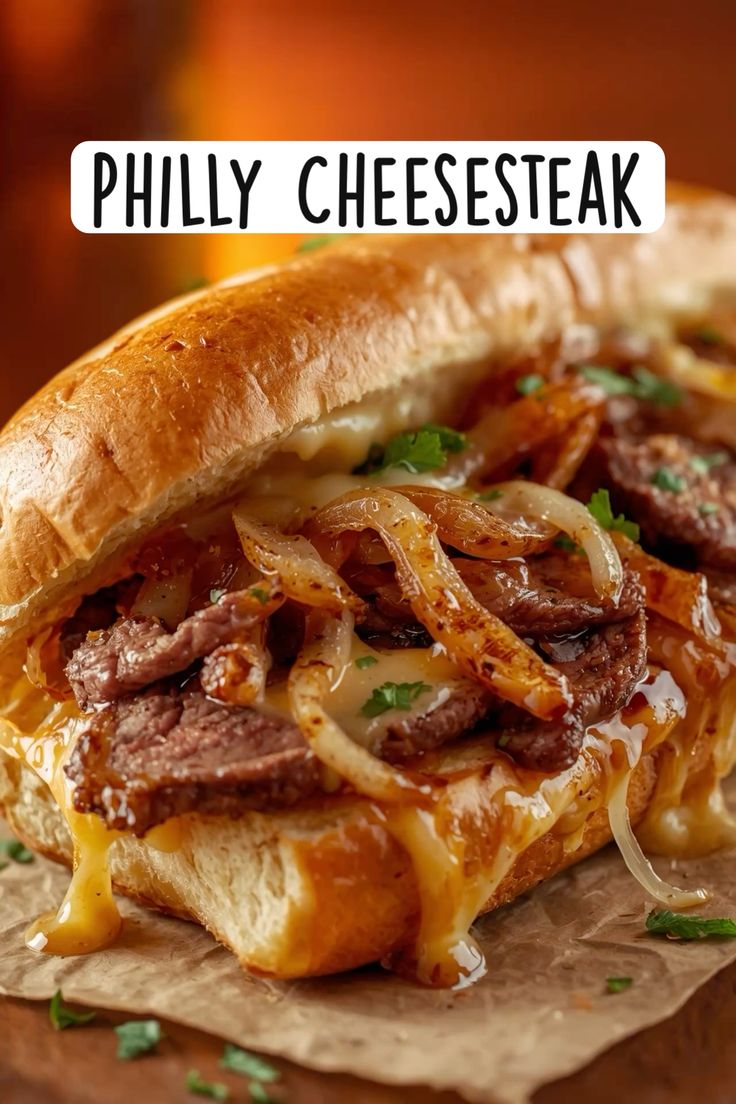
It’s not just a sandwich; it’s a legend, a culinary icon steeped in Philadelphia history, and the ultimate test of simplicity and quality ingredients. Forget what you’ve seen in fast-food chains—the authentic version is a beautiful, messy symphony of shaved, high-quality beef, perfectly caramelized onions, and a blanket of melty, gooey cheese, all piled into a sturdy, yet tender, Italian-style roll.
This isn’t a delicate recipe; it’s a commitment to robust flavor and the sheer joy of a truly great sandwich. This comprehensive guide will take you step-by-step through the process, covering the essential ingredients, the traditional techniques, and the pro tips you need to recreate the genuine, mouth-watering experience of a real Philadelphia cheesesteak in your own kitchen.
The Unspoken Rules of an Authentic Cheesesteak
Before we dive into the sizzling details, it’s crucial to understand the pillars that hold this delicious structure together. Authenticity hinges on three main components: the steak, the bread, and the cheese. Getting these right is non-negotiable for that genuine Philly flavor.
1. The Right Cut of Beef
The ribeye is the undisputed champion. Why? Because of its fantastic marbling, which melts as it cooks, keeping the steak incredibly juicy and flavorful. It should be sliced paper-thin—not strips, not chunks, but shaves. This is key to its fast cooking time and signature tender texture. If you can’t get pre-shaved ribeye, the secret is to partially freeze a whole steak for about 45 minutes; it will firm up enough for you to slice it razor-thin against the grain with a sharp knife.
2. The Foundation: The Roll
This is perhaps the most overlooked element outside of Philly. You need a roll that is simultaneously soft and chewy on the inside yet sturdy and slightly crusty on the outside. It must be able to absorb the beef juices and melted cheese without instantly turning into a soggy, collapsed mess. In Philadelphia, the gold standard is an Amoroso roll. If you can’t find that specific brand, look for a fresh, high-quality Italian hoagie roll that meets the sturdy-but-soft criteria. Do not use a crusty French baguette; it will shred the roof of your mouth.
3. The Great Cheese Debate
In Philly, there are three acceptable cheese options: Cheez Whiz (yes, really, and it’s a favorite for its smooth melt), White American cheese, or Provolone (the soft, deli variety, not the hard, aged version). For our recipe, we’ll lean into the creamy texture of American or Provolone, but we’ll cover the Whiz option later. The key is that the cheese must melt completely to create a savory “sauce” that binds the meat and onions together.
Authentic Philly Cheesesteak Recipe (Wid Onions)
This recipe is designed to be made on a large skillet or griddle, mimicking the flat-top surface used in legendary Philly shops like Pat’s and Geno’s.
Yields: 4 Cheesesteaks
Prep Time: 15 minutes (plus freezing time for beef)
Cook Time: 20 minutes
Ingredients
For the Caramelized Onions
- 2 tablespoons vegetable or canola oil (high smoke point is essential)
- 2 large yellow onions, thinly sliced (the thinner the better for fast caramelization)
- 1/2 teaspoon Kosher salt
- 1/4 teaspoon freshly ground black pepper
For the Steak and Assembly
- 1 1/2 pounds boneless ribeye steak, shaved paper-thin (or frozen and sliced as described above)
- 2 tablespoons vegetable or canola oil (or clarified butter/ghee for extra richness)
- 1 teaspoon salt
- 1/2 teaspoon black pepper
- 1/2 teaspoon garlic powder (optional, but highly recommended)
- 12 slices (or 1 cup) White American Cheese or thin-sliced Provolone (3 slices per sandwich)
- 4 high-quality Italian/Hoagie rolls (Amoroso style), cut lengthwise, but not all the way through
- Optional: Small amount of mayo or butter for toasting the rolls
Step-by-Step Cooking Instructions
Section 1: Preparing the Beef and Onions
1. Slice the Beef (The Critical Step):
If you bought a whole ribeye steak, place it in the freezer for about 45 minutes until it is very firm but not frozen solid. Using a very sharp knife, shave the steak across the grain as thinly as humanly possible. Once sliced, gather the shaves and give them a quick, coarse chop on the cutting board. This creates the signature “frizzled” texture. Set the chopped steak aside.
2. Caramelize the Onions (The Flavor Base):
Heat a large skillet or flat griddle over medium heat. Add the oil and the sliced yellow onions. Season with salt and pepper. Cook slowly, stirring frequently, for about 10-15 minutes. You’re aiming for a deep golden-brown color—not burnt, but sweet, soft, and caramelized. The low-and-slow approach brings out the natural sweetness that balances the savory beef. Once they are perfectly browned, transfer the onions to a bowl and set aside. Do not clean the pan—the flavor residue is crucial!
Section 2: Cooking the Steak
3. Heat the Surface:
Increase the heat under the skillet or griddle to medium-high or high. The surface needs to be hot. Add the remaining 2 tablespoons of oil (or butter). You want the oil to be shimmering, almost smoking.
4. Sear and Season the Steak:
Lay the thinly sliced beef onto the hot surface in a single, even layer. You should hear a vigorous sizzle immediately. Let it sear undisturbed for about 1 to 2 minutes. This creates that desirable browning and crust (the Maillard reaction).
5. Chop and Combine:
Using two metal spatulas (or a spatula and a bench scraper), begin to quickly chop and turn the meat, breaking up the larger slices into smaller, bite-sized pieces as it cooks. Once the meat is about halfway cooked (no longer bright red), generously season it with the salt, pepper, and optional garlic powder. Continue to chop and flip until the meat is fully cooked and has developed a nice, rich brown color—this should only take another 2-3 minutes total, thanks to how thin the slices are. Do not overcook!
6. Fold in the Onions:
Return the caramelized onions to the pan and mix them thoroughly into the chopped steak. The mixture should be glistening and juicy.
Section 3: The Melt and Assembly
7. Create the Piles:
Divide the steak and onion mixture into four separate, elongated piles—roughly the length of your hoagie rolls.
8. Apply the Cheese:
Lay 3 slices of your chosen cheese over each pile of meat and onions. To help the cheese melt quickly and completely, you can cover the piles with an overturned metal bowl or a lid for about 30-60 seconds, trapping the steam and heat. The cheese should become a beautiful, gooey blanket.
9. The Scoop and Flip:
This is the classic technique. Open your hoagie roll and place it cut-side down directly on top of one cheesy pile of meat. The bread should lightly absorb the meat juices. Now, quickly and confidently, slide a long, sturdy metal spatula underneath the entire pile and scoop it up, using the roll to help turn the whole thing over in one fluid motion. Flip it right-side up onto your plate, and repeat with the remaining three sandwiches.
10. Serve Immediately:
Serve your authentic Philly Cheesesteak immediately. This sandwich waits for no one!
Pro Tips for the Perfect, Non-Soggy Cheesesteak (Philly Cheesesteak Tips, How to make it Juicy, Cheesesteak Mistakes)
The Bread Prep
For an extra layer of flavor and to help the roll stand up to the juiciness, lightly brush the inside of your roll with a little melted butter or a thin layer of mayo before adding the meat, then gently toast the roll cut-side down on the griddle for about 30 seconds. A warm roll is an essential part of the experience.
Don’t Crowd the Pan
If you are making more than two cheesesteaks at a time, cook the steak in batches. Overcrowding the skillet will lower the temperature dramatically, causing the meat to steam rather than sear. Steamed meat is gray and dry; seared meat is brown and juicy. The hallmark of a great cheesesteak is a good sear.
The True “Whiz” Method
If you’re opting for Cheez Whiz (a classic choice often ordered as “Whiz Wit” meaning with Whiz and with onions), simply heat the Whiz in a small saucepan until it’s pourable. Assemble the meat and onions in the roll first, then drizzle the warm Whiz over the top. It’s undeniably messy, but undeniably authentic.
Seasoning Strategy
Only season the steak after it has hit the hot pan and is starting to brown. Seasoning it beforehand can draw moisture out, making it harder to get a good sear.
Beyond the Basics: The Cheesesteak Culture
The Order: What to Say in Philly
In Philadelphia, ordering is a matter of efficiency. You state your cheese preference, followed by whether you want onions (“wit”) or without (“widout”).
- “Whiz Wit”: Cheez Whiz and onions.
- “Provolone Widout”: Provolone cheese, no onions.
- “American Wit”: American cheese and onions.
Side Dish Suggestions (SEO: Best Sides for Cheesesteak)
What do you pair with this American classic? Keep it simple and traditional.
- French Fries: Crisp, often crinkle-cut fries are the perfect salty, satisfying companion.
- Onion Rings: A crunchier alternative to the fries.
- Cherry Peppers: A side of pickled hot or sweet cherry peppers offers a crucial acidic counterpoint to the richness of the beef and cheese.
Variations: The Pepper Steak
While the absolute purists stick to “steak, cheese, and onions,” a popular variation is the addition of sautéed green bell peppers. If you choose to add them, slice them thinly and cook them down with the onions until they are soft and slightly charred. Some enthusiasts also add sliced mushrooms, but a true aficionado will tell you to keep the toppings to a minimum and let the quality of the beef and cheese shine.
Final Thoughts: Taste the Tradition
The authentic Philly Cheesesteak is a perfect example of how a few simple, high-quality ingredients, prepared with the right technique, can create a truly legendary dish. From the careful shaving of the ribeye to the golden-brown sweetness of the caramelized onions and the final, beautiful collapse of the melted cheese, every bite is a tribute to its South Philly origins.
Now that you’re armed with the secrets of the masters, fire up your griddle, sharpen your knife, and get ready to create a masterpiece that will transport you straight to the streets of the City of Brotherly Love. Enjoy every messy, savory bite!