Classic Italian Panettone – Soft, Fluffy & Loaded with Fruit
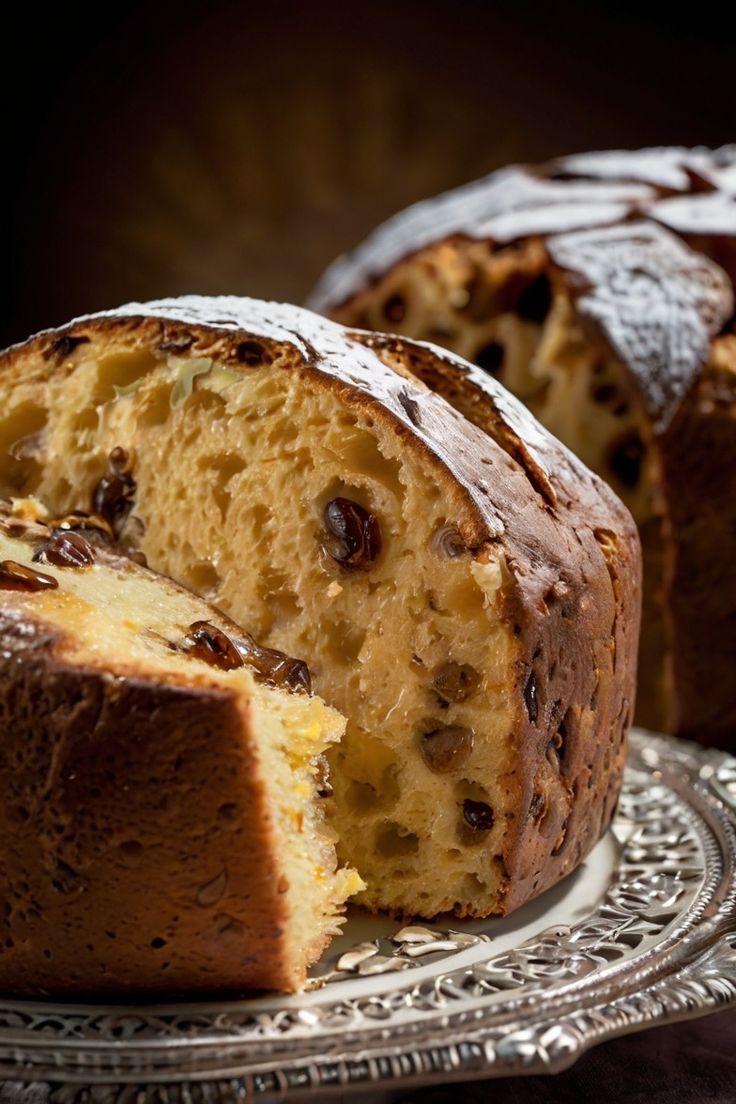
This classic Italian Panettone is a tall, dome-shaped sweet bread known for its light, airy, and incredibly soft texture. It’s rich with butter and eggs and is traditionally studded with candied orange, lemon zest, and raisins. While it requires patience and multiple proofing stages, the result is a truly spectacular, festive bread that’s perfect for the holiday season.
Why Panettone is a Labor of Love
- Enriched Dough: The high content of butter and egg yolks makes the dough incredibly rich and tender.
- Multiple Proofing Stages: This is what gives Panettone its signature tall, airy structure. Each proofing stage develops the gluten and flavor.
- Unique Flavor Profile: The combination of candied citrus, raisins, and a hint of vanilla creates a complex and aromatic taste that is unmistakably Panettone.
Ingredients
This recipe is divided into a starter dough and the main dough for best results. All measurements are provided in US customary and metric units.
For the Starter Dough (First Dough):
- Active Dry Yeast: 2 ¼ teaspoons (7g)
- Warm Water: ¼ cup (60ml), about 105-115°F (40-46°C)
- All-Purpose Flour: 1 cup (120g)
- Granulated Sugar: 2 tablespoons (25g)
- Large Egg Yolk: 1
For the Main Dough (Second Dough):
- Starter Dough: All of the prepared starter dough
- All-Purpose Flour: 3 cups (360g)
- Granulated Sugar: ¾ cup (150g)
- Salt: 1 teaspoon
- Large Eggs: 3, room temperature
- Large Egg Yolk: 1, room temperature
- Unsalted Butter: ¾ cup (170g), softened to room temperature
- Vanilla Extract: 1 teaspoon
- Lemon Zest: 1 tablespoon
- Orange Zest: 1 tablespoon
For the Fruit Mix-Ins:
- Golden Raisins: ½ cup (80g)
- Candied Orange Peel: ½ cup (80g), chopped
- Candied Lemon Peel: ½ cup (80g), chopped
For Finishing:
- Large Egg Yolk: 1
- Heavy Cream or Milk: 1 tablespoon
Step-by-Step Instructions
This recipe requires several hours, so plan accordingly.
Step 1: Make the Starter Dough
- In a small bowl, dissolve the yeast in the warm water. Let it sit for 5 minutes until it’s foamy.
- In a medium bowl, whisk together the flour, sugar, and egg yolk.
- Pour the yeast mixture into the flour mixture and stir until a sticky dough forms.
- Cover the bowl with plastic wrap and let it rise in a warm place for 1 ½ to 2 hours, or until it has doubled in size and is bubbly.
Step 2: Prepare the Main Dough
- In a large bowl of a stand mixer fitted with the dough hook, combine the starter dough, flour, sugar, and salt.
- Mix on low speed until the ingredients are just combined.
- In a separate bowl, whisk together the 3 eggs, 1 egg yolk, vanilla extract, lemon zest, and orange zest.
- Gradually add the egg mixture to the dough in the stand mixer, mixing on low speed until the dough comes together.
Step 3: Knead and Add Butter
- Increase the mixer speed to medium and knead for 10-15 minutes. The dough will be very soft and sticky.
- With the mixer still running, add the softened butter one tablespoon at a time, allowing each piece to be fully incorporated before adding the next. This will take about 10 minutes.
- Continue to knead until the dough is smooth, elastic, and pulls away from the sides of the bowl. It will be very soft but should pass the “windowpane test” (stretch a small piece of dough; it should be thin enough to see light through without tearing).
Step 4: Add the Fruit
- Gently fold the raisins and candied citrus peels into the dough using your hands or the mixer on low speed for just a few seconds. Do not overmix.
Step 5: First Rise (Bulk Fermentation)
- Place the dough in a large, lightly greased bowl. Cover with plastic wrap and let it rise in a warm place for 3-4 hours, or until it has doubled in size.
Step 6: Shape and Second Rise
- Gently punch down the dough to release the air.
- Form the dough into a tight ball. Place the dough into a paper Panettone mold (you can buy these online).
- Cover the mold loosely with plastic wrap and let it rise again for 3-4 hours, or until it has almost doubled in size and is dome-shaped. This is the final and most important rise.
Step 7: Bake the Panettone
- Preheat your oven to 375°F (190°C).
- In a small bowl, whisk together the egg yolk and heavy cream/milk to create an egg wash.
- Gently brush the top of the Panettone with the egg wash.
- Make a small “X” cut on top of the dough with a sharp knife or razor blade.
- Bake for 15 minutes. Then, reduce the oven temperature to 350°F (175°C) and bake for an additional 45-55 minutes, or until the top is a deep golden brown and an instant-read thermometer inserted into the center reads 200°F (93°C).
Step 8: Cool and Serve
- Immediately after removing the Panettone from the oven, pierce the bottom of the mold with two long metal skewers, about 3 inches apart.
- Invert the Panettone and suspend it upside down between two tall objects (like chairs or wine bottles) for at least 2 hours, or until it has cooled completely. This prevents the rich dough from collapsing on itself.
- Once cooled, slice and serve.
Tips for Success
- Be Patient with the Proofing: The long fermentation times are what give Panettone its signature airy texture and complex flavor. Do not rush these steps.
- Room Temperature Ingredients: Make sure your butter, eggs, and egg yolks are at room temperature. This is essential for proper dough development.
- The Right Mold: Using a paper Panettone mold is crucial for achieving the classic tall shape.
- Don’t Skip the Upside-Down Cooling: This step is non-negotiable for keeping the rich, heavy crumb from collapsing.